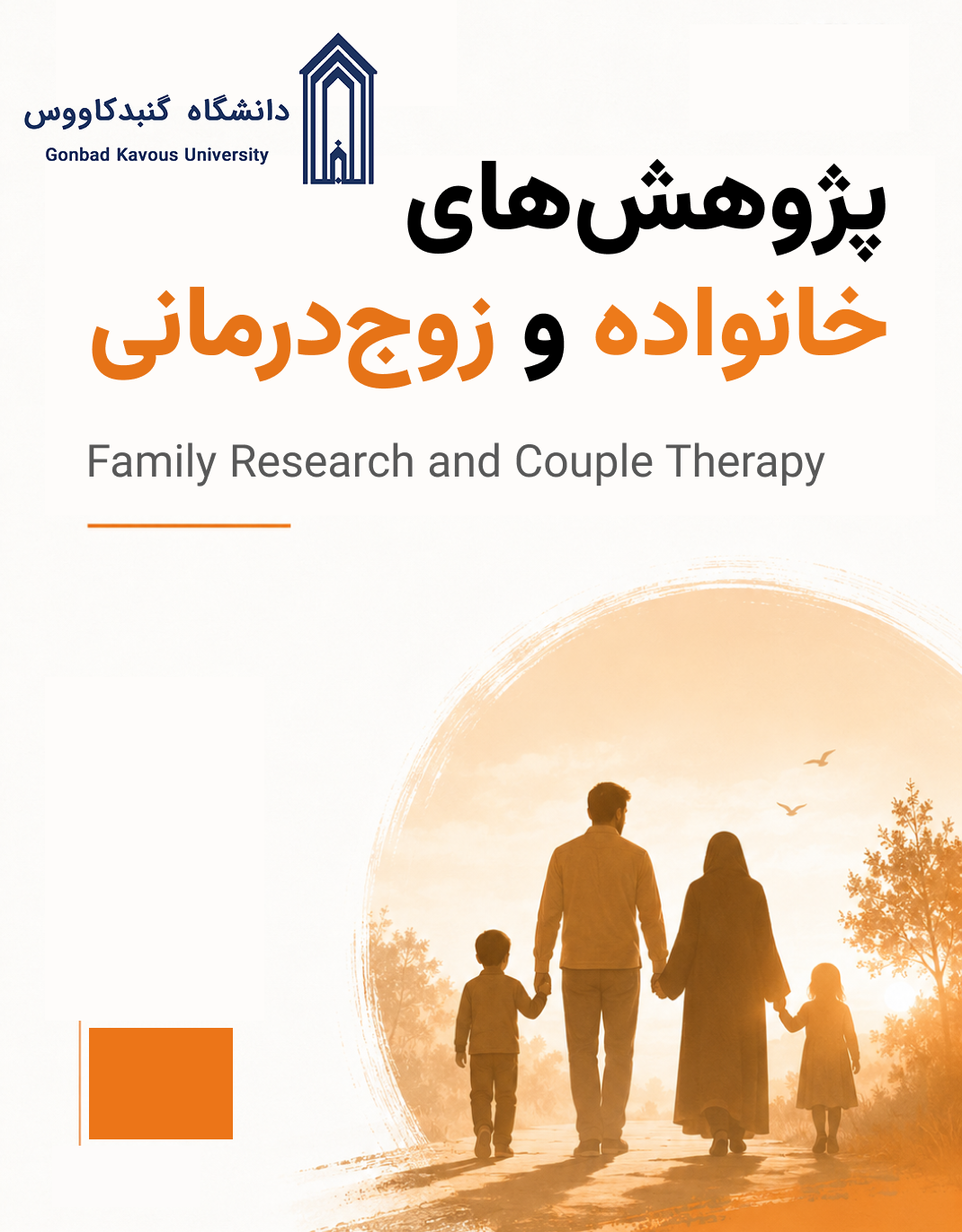
Designing a Family Mental Health Model Based on Family Cohesion, Role Flexibility, Emotional Communication, and Perceived Support
Keywords:
Family mental health, Family cohesion, Role flexibility, Emotional communication, Perceived support, Qualitative research, Thematic analysisAbstract
Objective: This study aimed to design a qualitative model of family mental health based on the lived experiences of families in Tehran, with emphasis on family cohesion, role flexibility, emotional communication, and perceived support.
Methods and Materials: This qualitative study was conducted using thematic analysis. The participants were 24 members of families living in Tehran, selected through purposive sampling with maximum variation in gender, age, marital status, educational level, and family structure. Data were collected through in-depth semi-structured interviews. The interviews continued until theoretical saturation was achieved; initial saturation occurred at the twenty-first interview, and three additional interviews were conducted to ensure data adequacy. All interviews were audio-recorded with participants’ consent, transcribed verbatim, and analyzed using open coding, conceptual clustering, and theme development with the assistance of NVivo software. Credibility was enhanced through member checking, peer review, prolonged engagement with the data, and maintaining an audit trail.
Findings: Data analysis led to the identification of five main categories: “balanced cohesion and secure belonging,” “role flexibility and adaptive distribution of responsibilities,” “emotional communication and reparative dialogue,” “perceived support and psychological backing,” and “family mental health as the capacity to regulate emotions, roles, and relationships.” The findings indicated that families with sufficient emotional bonding, flexible boundaries, opportunities for emotional dialogue, and reliable support showed greater capacity to manage everyday stressors, internal conflicts, and external crises. The final model suggested that family mental health is not the outcome of a single factor, but the product of dynamic interaction among bonding, role organization, emotional expression, and perceived support.
Conclusion: Family mental health can be conceptualized as the family system’s capacity to maintain belonging, reorganize roles, express emotions, and perceive support under stressful conditions. The proposed model may be useful for family therapy, parent education, marital counseling, and family-based mental health promotion programs.
Downloads
References
Berryhill, M. B., Harless, C., & Kean, P. (2018). College student cohesive-flexible family functioning and mental health: Examining gender differences and the mediation effects of positive family communication and self-compassion. The Family Journal, 26(4), 422–432.
Bowen, M. (1978). Family therapy in clinical practice. Jason Aronson.
Braun, V., & Clarke, V. (2006). Using thematic analysis in psychology. Qualitative Research in Psychology, 3(2), 77–101.
Cohen, S., & Wills, T. A. (1985). Stress, social support, and the buffering hypothesis. Psychological Bulletin, 98(2), 310–357.
Creswell, J. W., & Poth, C. N. (2018). Qualitative inquiry and research design: Choosing among five approaches (4th ed.). SAGE.
Gottman, J. M., & Levenson, R. W. (1992). Marital processes predictive of later dissolution: Behavior, physiology, and health. Journal of Personality and Social Psychology, 63(2), 221–233.
Guest, G., Bunce, A., & Johnson, L. (2006). How many interviews are enough? An experiment with data saturation and variability. Field Methods, 18(1), 59–82.
House, J. S. (1981). Work stress and social support. Addison-Wesley.
Huang, X., Hu, N., Yao, Z., & Peng, B. (2022). Family functioning and adolescent depression: A moderated mediation model of self-esteem and peer relationships. Frontiers in Psychology, 13, 962147.
Kvale, S., & Brinkmann, S. (2015). InterViews: Learning the craft of qualitative research interviewing (3rd ed.). SAGE.
Lincoln, Y. S., & Guba, E. G. (1985). Naturalistic inquiry. SAGE.
McCubbin, H. I., & Patterson, J. M. (1983). The family stress process: The double ABCX model of adjustment and adaptation. Marriage & Family Review, 6(1–2), 7–37.
Minuchin, S. (1974). Families and family therapy. Harvard University Press.
Olson, D. H. (2000). Circumplex model of marital and family systems. Journal of Family Therapy, 22(2), 144–167.
Olson, D. H., Russell, C. S., & Sprenkle, D. H. (1979). Circumplex model of marital and family systems: I. Cohesion and adaptability dimensions, family types, and clinical applications. Family Process, 18(1), 3–28.
Olson, D. H., Waldvogel, L., & Schlieff, M. (2019). Circumplex model of marital and family systems: An update. Journal of Family Theory & Review, 11(2), 199–211.
Patton, M. Q. (2015). Qualitative research & evaluation methods (4th ed.). SAGE.
Prime, H., Wade, M., & Browne, D. T. (2020). Risk and resilience in family well-being during the COVID-19 pandemic. American Psychologist, 75(5), 631–643.
Walsh, F. (2003). Family resilience: A framework for clinical practice. Family Process, 42(1), 1–18.
Walsh, F. (2016). Applying a family resilience framework in training, practice, and research: Mastering the art of the possible. Family Process, 55(4), 616–632.
Yan, Z., Su, Y., Zhu, J., & He, D. (2024). Parents’ perceived social support and children’s mental health: The chain mediating role of parental marital quality and parent-child relationships. Current Psychology, 43, 9190–9201.
Zimet, G. D., Dahlem, N. W., Zimet, S. G., & Farley, G. K. (1988). The Multidimensional Scale of Perceived Social Support. Journal of Personality Assessment, 52(1), 30–41.
Downloads
Publication Timeline
- Submitted
- Revised
- Accepted